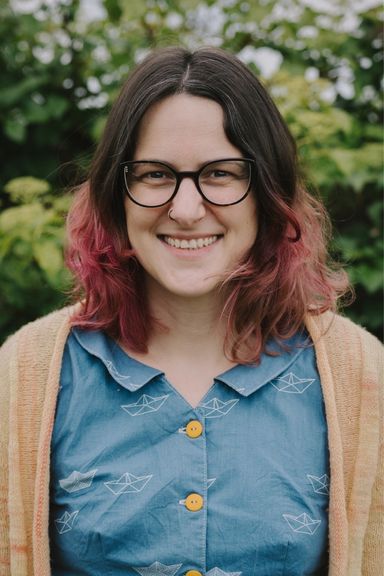
Katharina's reflections from Domain-Driven Design Europe 2026
Katharina spoke at Domain-Driven Design Europe 2026 and shares her reflections from the conference in Antwerp.
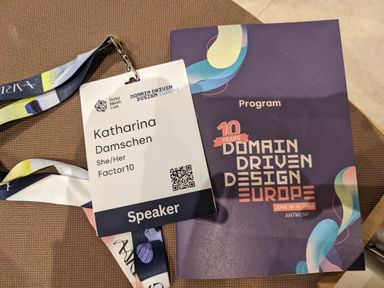
I was accepted to speak at Domain-Driven Design Europe 2026 back in February, and I have been extremely excited and nervous about it ever since. Last week, the conference finally took place in Antwerp, Belgium. I wrote up my summary of the conference.
Speaking on the first day
I arrived somewhat late on the first day of Domain-Driven Europe after my flight was canceled and I had to spend the night at the airport hotel. So I sadly missed Eric Evans' opening keynote. However, I made it in time to give my talk Just start (with Value Objects) right after lunch. I was happy with how it went, and also relieved that I got to give it on the first day. That made it much easier to enjoy the rest of the conference. Thank you to everyone who attended, and double thank you to everyone who talked to me afterward about it. And triple thank you to the organizers for helping me set everything up :). I have uploaded the slides on my blog. I will link to the recording once it is available.
Felienne Hermans' keynote
The closing keynote on Wednesday was held by Felienne Hermans and titled 'AI made me doubt everything about programming'. She talked about how tech has never been neutral, how in tech solutions that are hard are wrongly seen as more prestigious than things that solve actual problems, how tech needs to revolve more around people and that we do not need to use tools just because we can. She criticized the tech industry and called for more feminism and less AI. The topic was very relevant to me and I could relate to her experience. But even people who didn't agree with her were praising the talk for how it was delivered. Felienne even received a standing ovation.
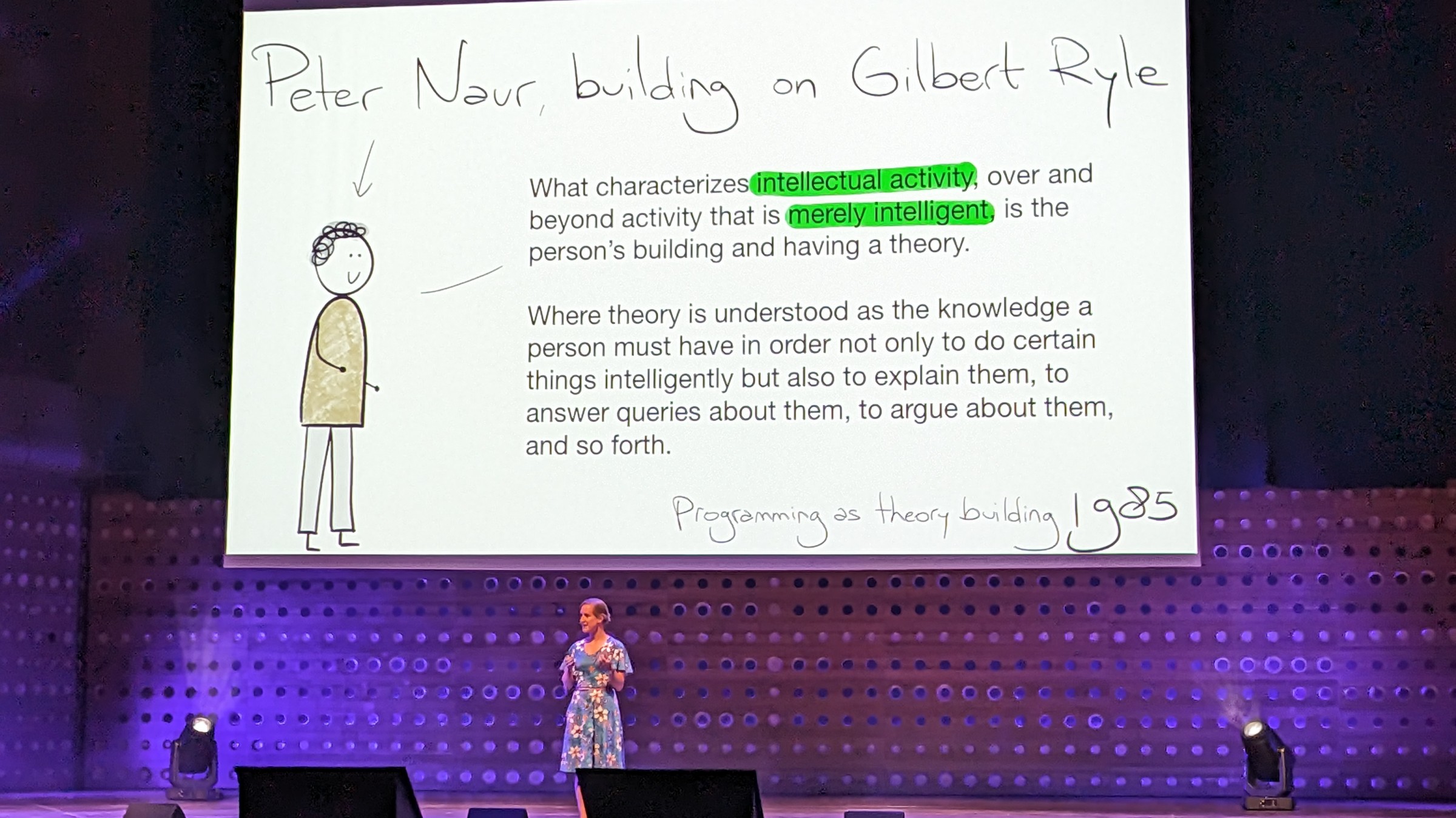
It is not usual that the use of AI is criticized at conferences, especially in keynotes. I also appreciated that there were a lot of talks that did not revolve around AI. It was still a topic, of course. Even among those who are still excited, everyone seemed to agree that there is a major economic AI bubble.
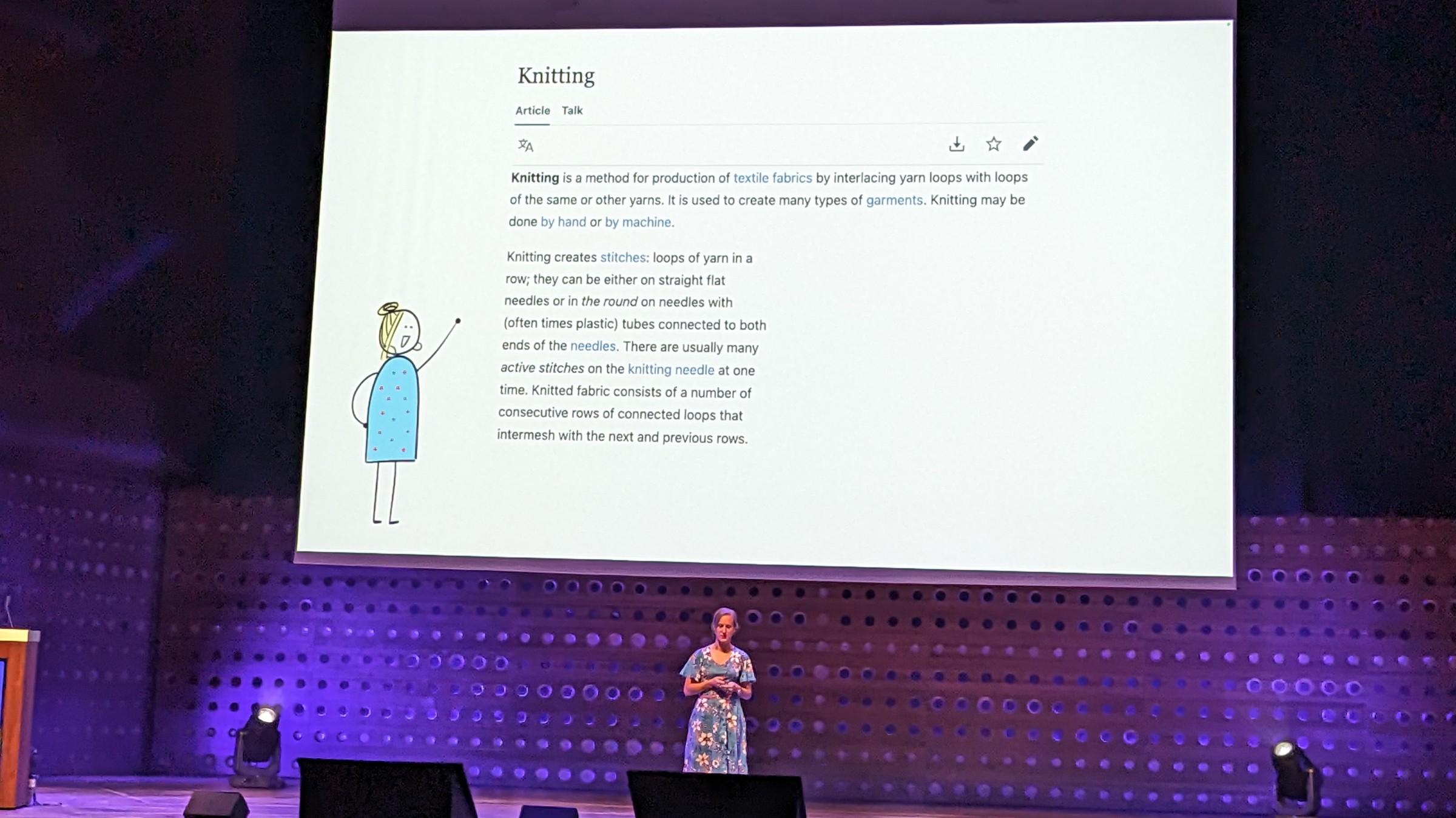
Felienne also talked about knitting (and mentioned my talk!) as an example of something complicated that does without always keeping up the impression of being something really hard. Maybe because it is mostly done by women.
Workshops and conversations on the second day
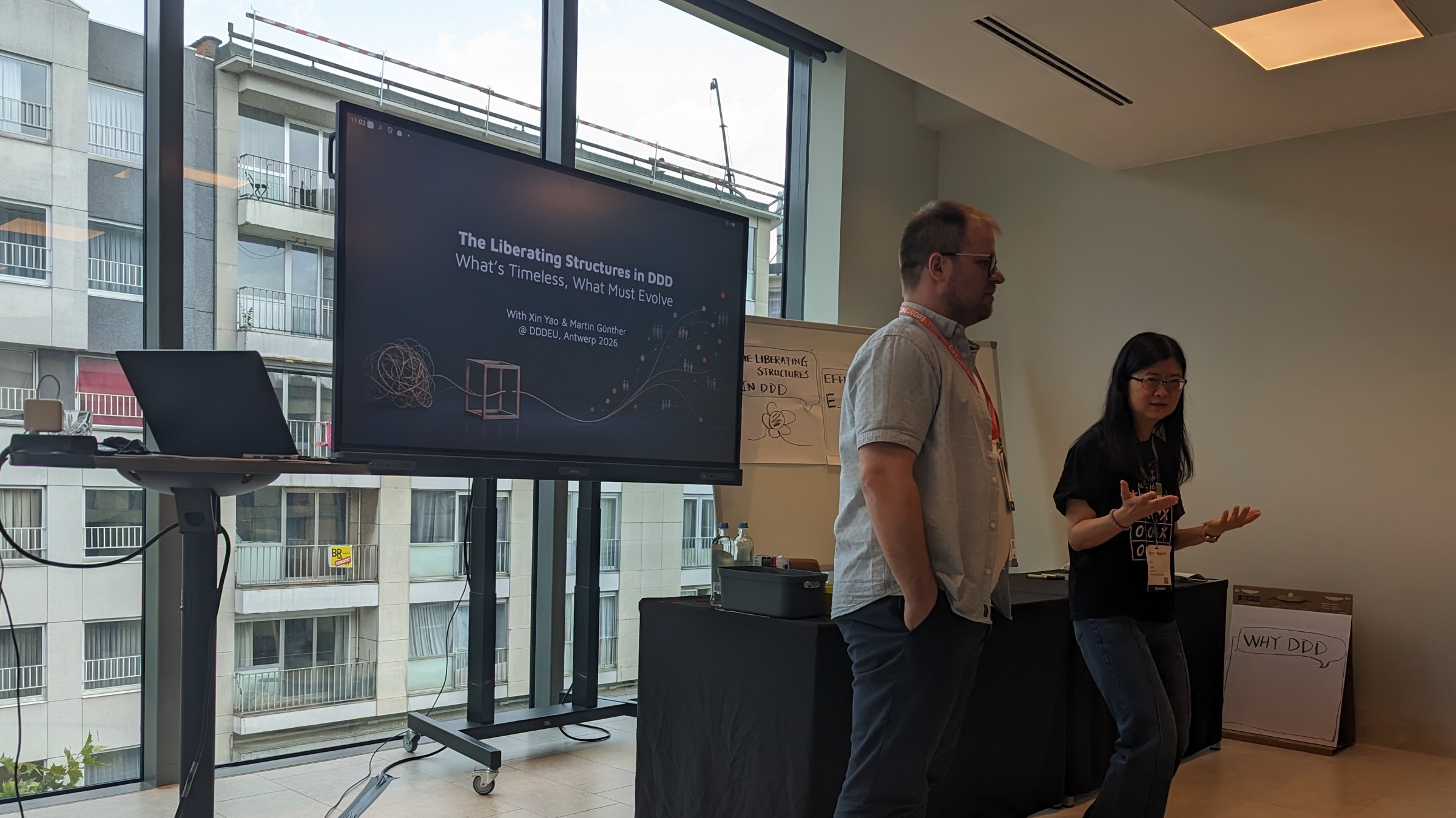
On the second day I mostly attended workshops. I learned about the Liberating Structures concept and applied it to DDD, facilitated by Xin Yao and Martin Günther. That was fun and a little uncomfortable (in a good way!). I had great discussion and really enjoyed the company of the people I work-shopped with.
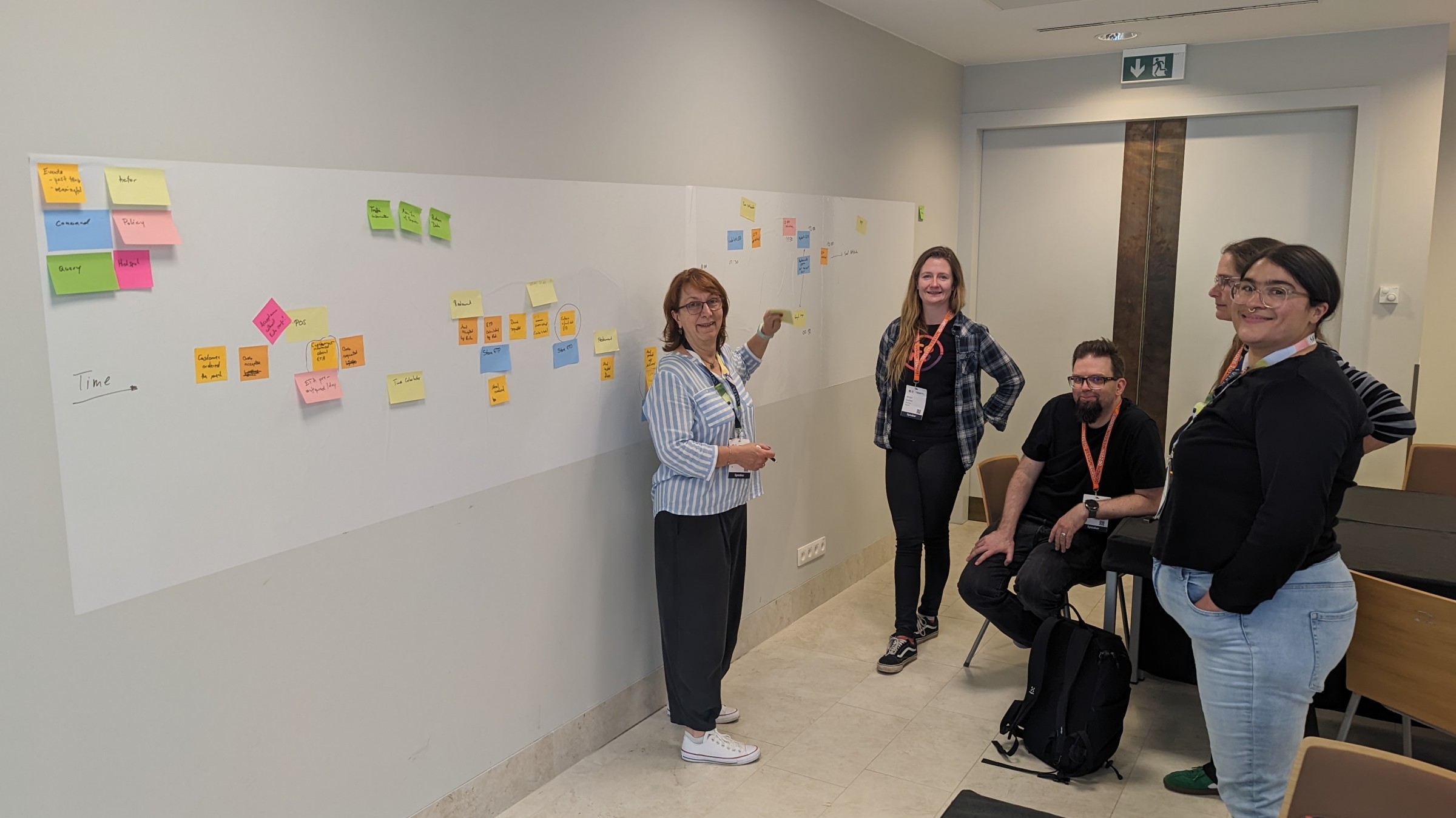
The second workshop I attended that day was held by Krisztina Hirth, Kenny (Baas) Schwegler, Henning Schwentner and Maxime Sanglan-Charlier. We explored different collaborative modeling techniques. I joined the svent-storming group, facilitated by Krisztina. Of course, my group came up with objectively the best solution. Not that it was a competition :D.
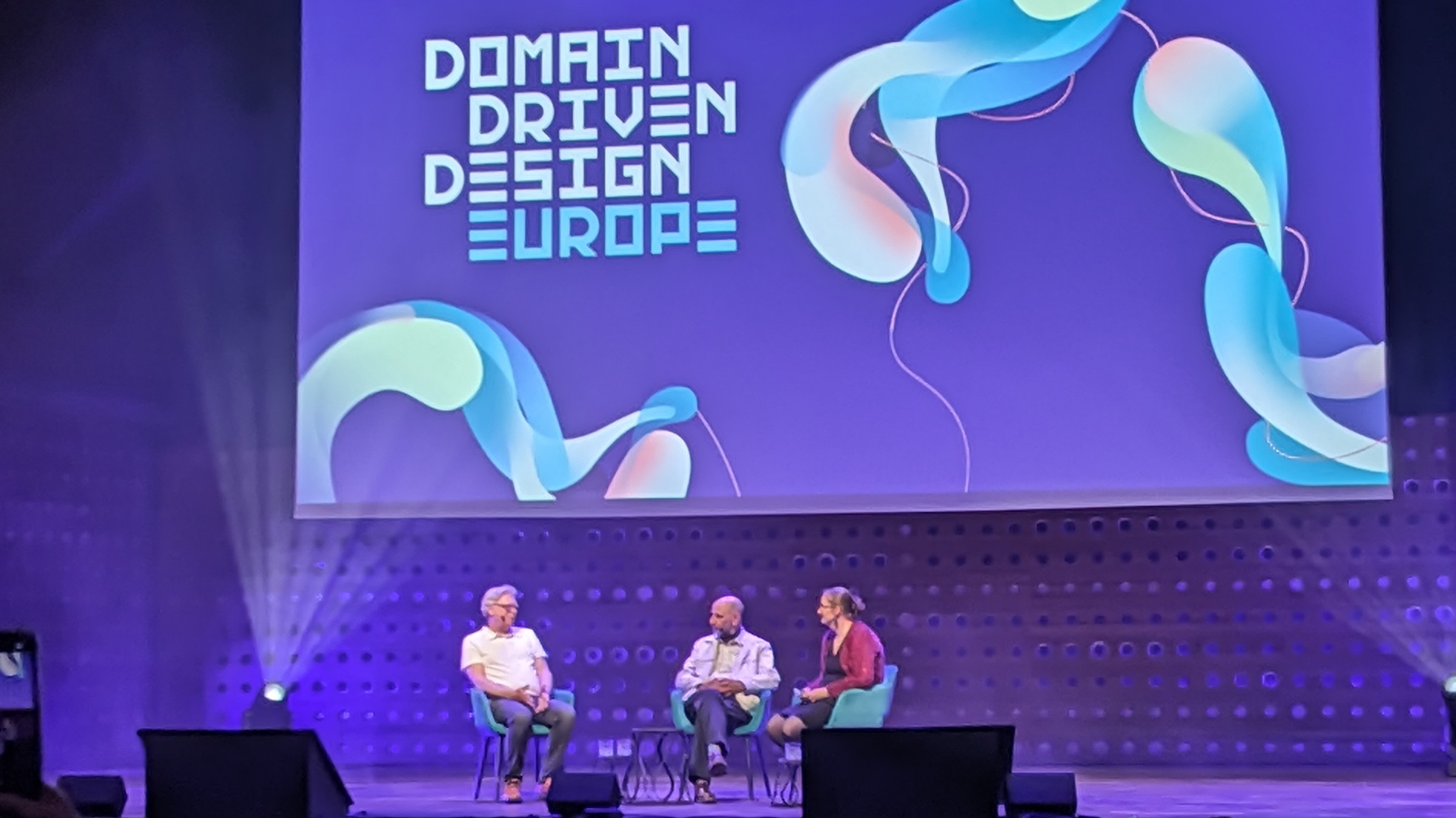
The closing 'keynote' this day was an on-stage-conversation between Martin Fowler and Eric Evans, moderated by Gien Verschatse. It drifted toward agentic coding pretty quickly and didn’t reveal much that would be new to someone who reads Martin Fowler’s blog regularly.
Talks from the final day
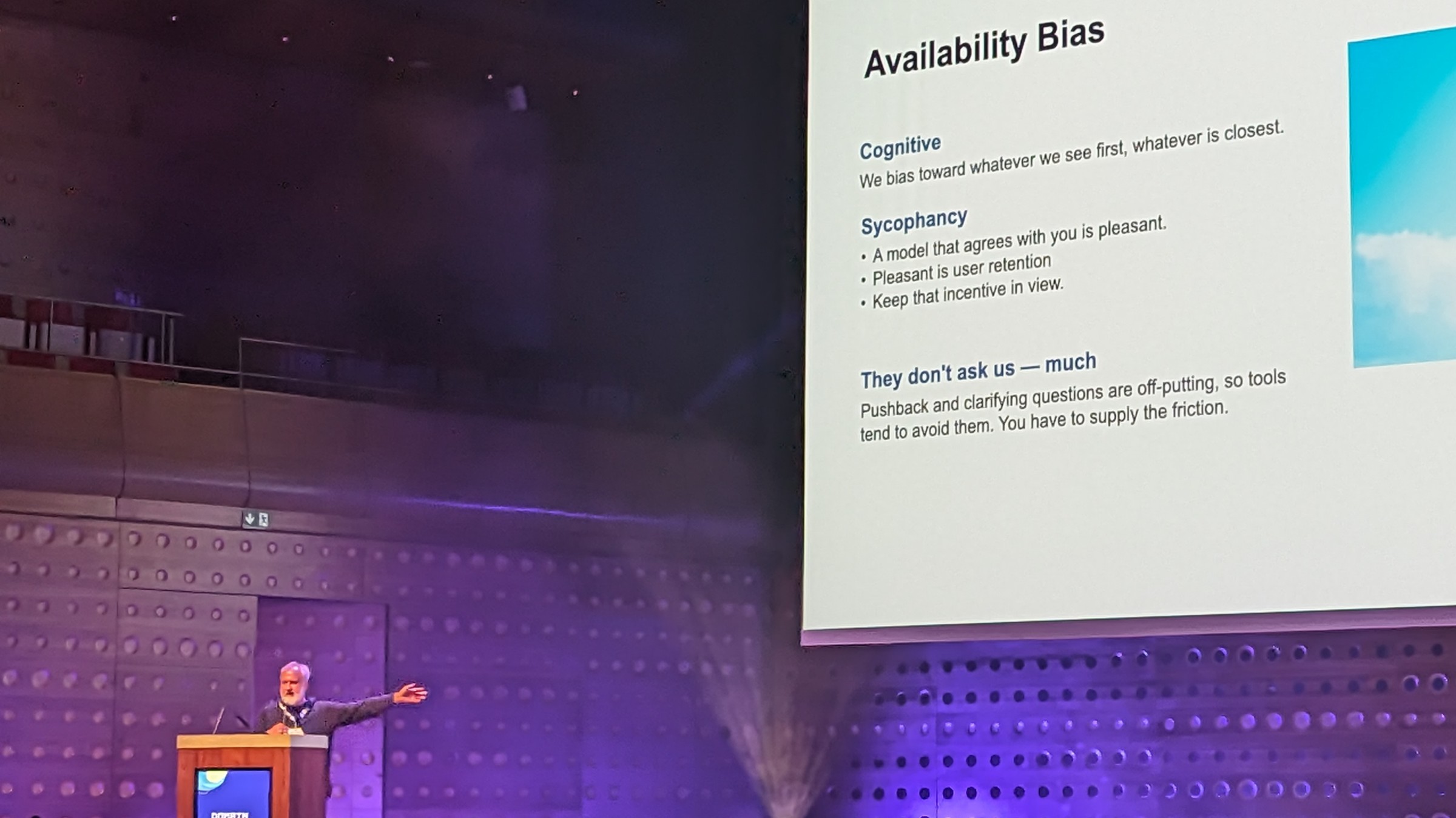
Michael Feathers opened the conference on the last day. He talked about how we gain skills and how those skills fade when we don't use them. He said that you cannot verify something without understanding it first. Michael gave some examples of how to use AI to verify and deepen your understanding.
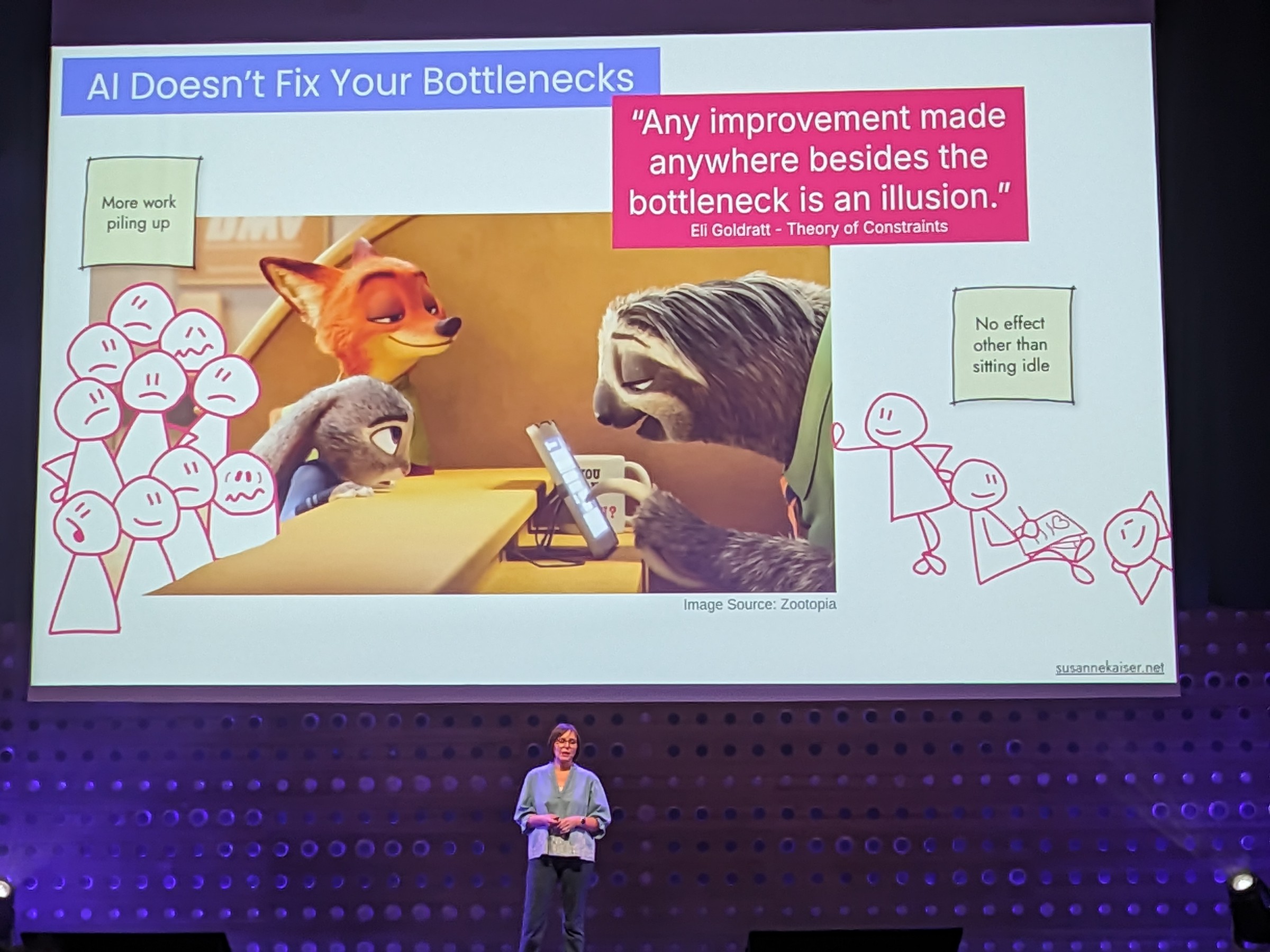
Next on the main stage was Susanne Kaiser. She reminded us that we still need to focus on building the foundations for continuous change. She talked about architecture for flow and the guardrails for continuous change, none of which is new (her words, but also mine).
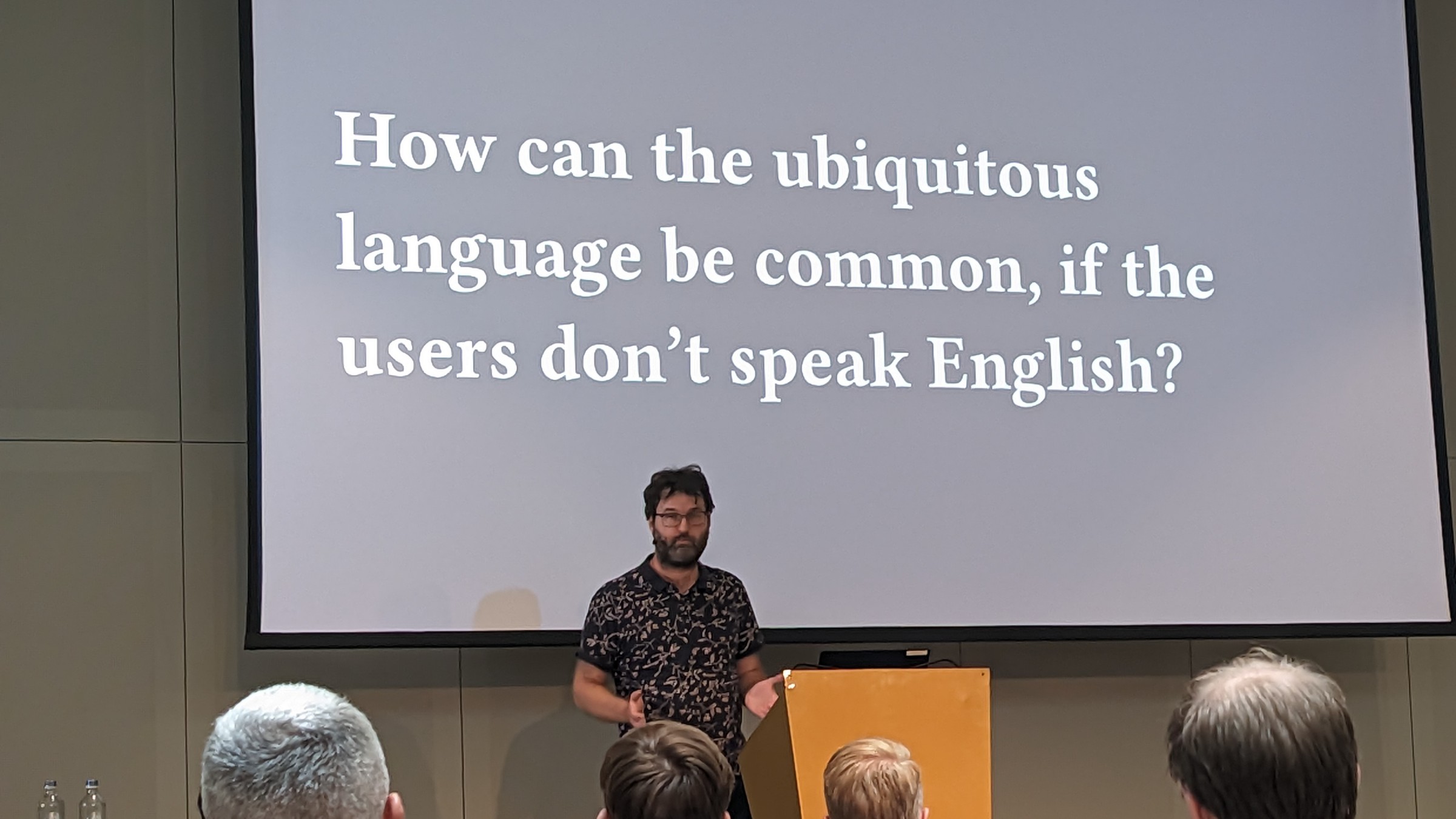
William Bartlett gave advice and insight for when the ubiquitous language isn't English. The talk was helpful and inviting. I attended because this question has been coming up for me repeatedly. Fun fact from my experience: 'get' in Swedish means 'goat' in English. So writing getNamn() can be read goatName().
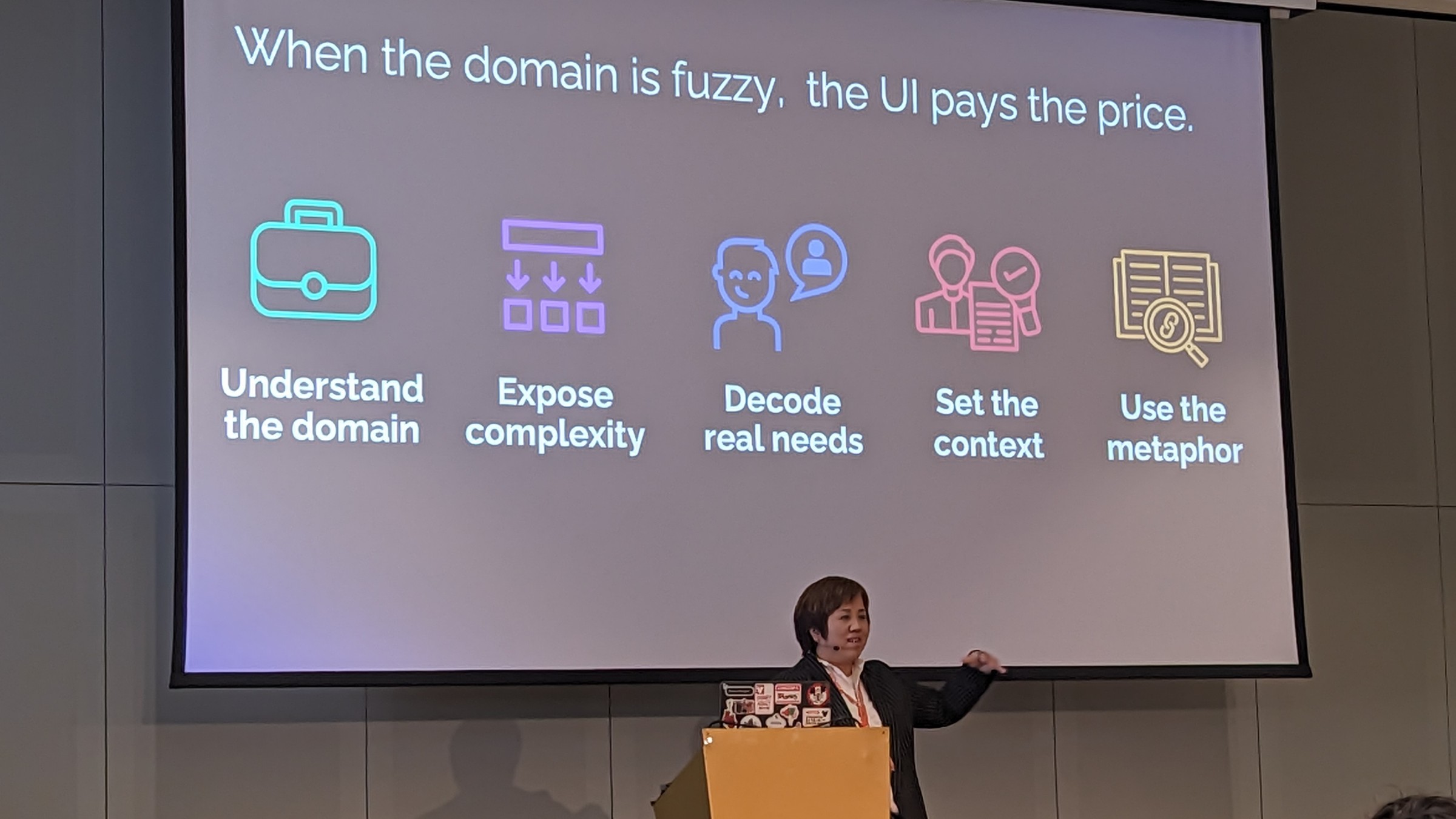
Frances Sun talked about how unintuitive UI is often the result of unclear processes and fuzzy domains. And just making the UI prettier does not address the real problems.
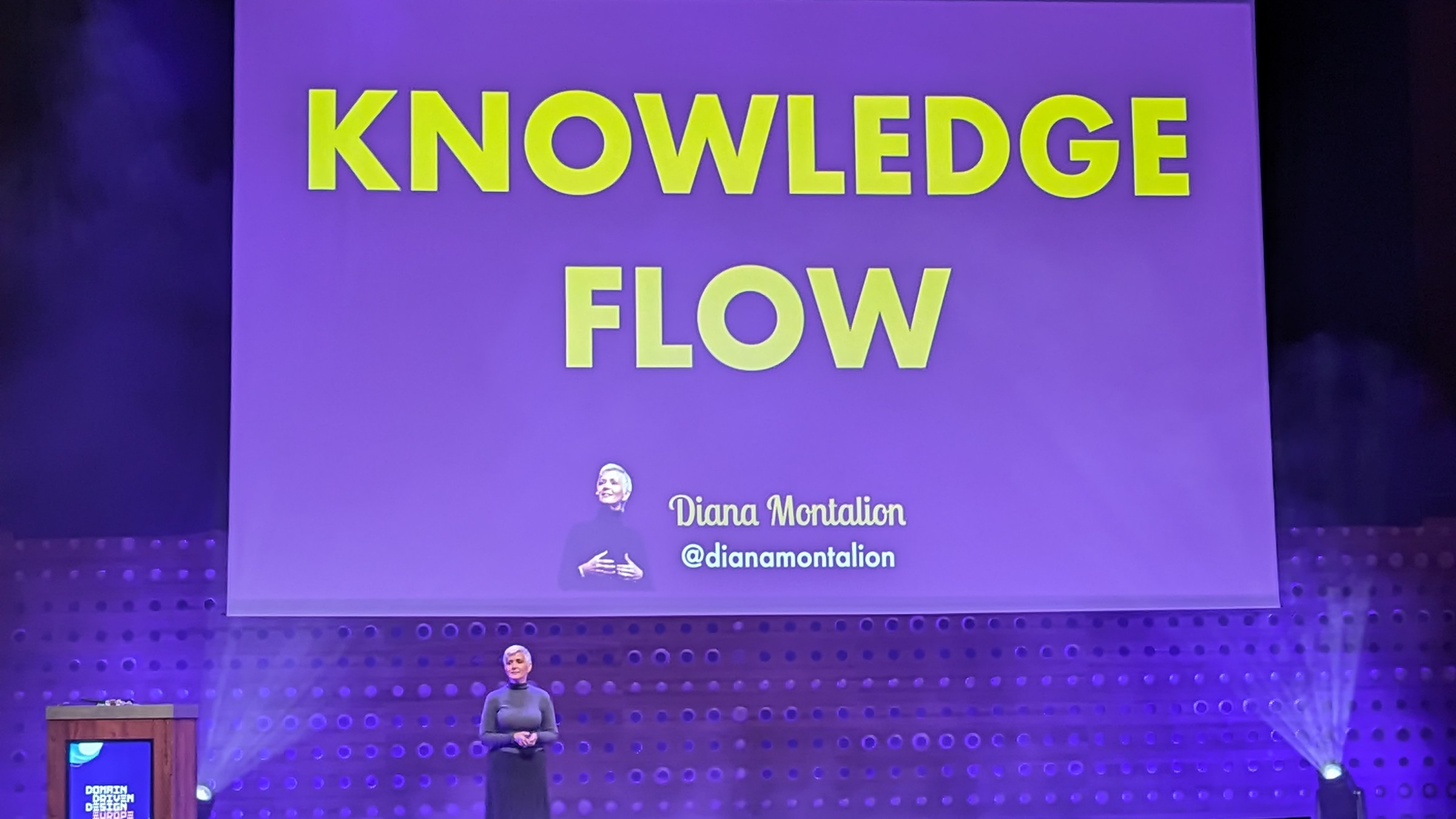
Diana Montalion gave the closing keynote. She talked about knowledge flow, about how we are transitioning toward building knowledge systems, and about why we should value knowledge and learning more highly.
I met lots of interesting and kind people. As with most conferences, I had FOMO all the time because I was missing out on great talks and workshops while I was listening to other talks and workshops. So if a talk is not on this list, it simply means I didn’t attend it because I chose to listen to something else.
The conference itself
I cannot think of a single thing that went wrong during the conference. I don't think I saw anyone who was stressed out (apart from the speakers!). The whole conference just worked. The communication with the team was excellent. Even when my flight was canceled, Anneke and Ilse set out to help immediately with the hotel booking. Pulling this conference off must have been an immense amount of work, and they made it look like it was nothing! Thank you!
Both food and drinks were great, I think it was a great choice that everything was vegetarian and the drinks served during the social events were alcohol-free.
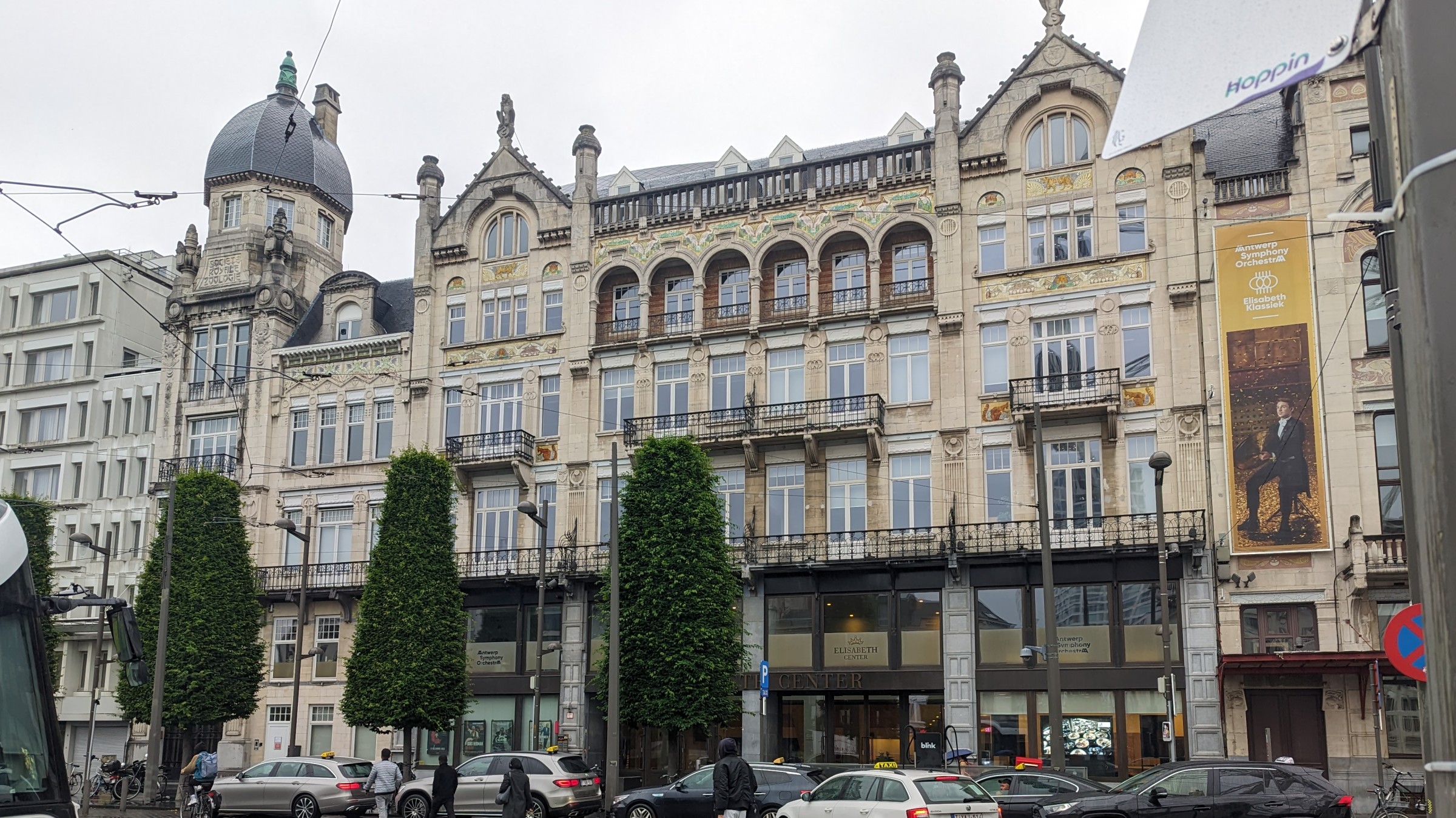
The venue was very carefully selected as well. It was right next to the train station and the hotel. The size was ideal and the rooms beautiful and well-prepared.
Next year the conference will take place in Amsterdam again. I hope to see you there!